Gaggia Stainless Steel Espresso Machine vs Gaggia Classic Evo Pro Espresso (2026): Key Differences
As an Amazon Associate we earn from qualifying purchases. Links on this page are affiliate links.
This guide compares the gaggia ri9380 46 e24 espresso machine vs classic evo pro. Both units are made in Italy with solid steel housing. They share a 58mm commercial portafilter, a commercial steam wand, and a three-way solenoid valve. Each delivers 9 bar of pump pressure for extraction. The main difference lies in their physical dimensions and color options. You need to check the size specs to see which fits your counter space better.
Key differences
| Aspect | Gaggia Stainless Steel Espresso Machine | Gaggia Classic Evo Pro Espresso Machine |
|---|---|---|
| Model Number | RI9380/46 | 19520054 |
| Color Options | Brushed Stainless Steel, Classic Blue, Industrial Grey, Thunder Black, Polar White | Jungle Green |
| Width | 3.74 inches | 15 inches |
| Height | 5.59 inches | 9.45 inches |
| Length | 3.15 inches | 9.06 inches |
| Weight | 20 pounds | 18.7 pounds |
Which one should you choose?
Choose Gaggia Stainless Steel Espresso Machine if
- You have very limited counter width and need a compact footprint under 4 inches wide.
- You prefer a traditional brushed stainless steel look or want choices like blue or black.
Choose Gaggia Classic Evo Pro Espresso Machine if
- You want a standard-sized espresso machine with more typical dimensions for easier access.
- You are looking for a distinct jungle green finish for your kitchen decor.
Verdict: Choose the RI9380/46 if your counter space is extremely narrow or you prefer a smaller, compact machine. Pick the Classic Evo Pro if you want a more standard size and a specific green color. Both machines offer identical core performance specs for espresso extraction.
Gaggia Stainless Steel vs Evo Pro
Physical dimensions
The Gaggia Stainless Steel Espresso Machine measures 3.74 inches in width, 5.59 inches in height, and 3.15 inches in length. These compact figures suggest a very small footprint. In contrast, the Gaggia Classic Evo Pro Espresso Machine is significantly larger. It measures 15 inches in width, 9.45 inches in height, and 9.06 inches in length. You will notice a substantial difference in how much counter space each unit occupies. The Evo Pro is clearly designed for a standard kitchen setup, while the Stainless Steel model appears optimized for tight spaces or specific mounting configurations. If your kitchen counter has limited width, the Stainless Steel model offers a distinct spatial advantage.
Build weight
Weight often indicates the solidity of the internal components and the stability of the machine during operation. The Gaggia Stainless Steel Espresso Machine weighs 20 pounds. The Gaggia Classic Evo Pro Espresso Machine weighs 18.7 pounds. Both machines utilize solid steel housing made in Italy, which contributes to their durability. However, the Stainless Steel model is slightly heavier by 1.3 pounds. This extra weight may provide marginally better stability during the extraction process or while steaming milk. For most users, this difference is negligible, but if you prefer a machine that feels heavier and more anchored on the counter, the Stainless Steel model holds a slight edge.
Extraction pressure
Both machines are designed to deliver 9 bar of pump pressure for espresso extraction. This is the standard pressure recommended for pulling a proper shot of espresso. The Gaggia Stainless Steel Espresso Machine lists 9 Bar in its key specs. The Gaggia Classic Evo Pro Espresso Machine also lists 9 bar. Since the pressure specification is identical for both units, there is no technical difference in the extraction force they apply to the coffee grounds. You can expect the same baseline pressure performance from either machine. This aspect is a complete tie, as neither product offers higher or lower pressure than the other.
Portafilter size
The portafilter is the handle-like tool that holds the coffee grounds during brewing. Both the Gaggia Stainless Steel Espresso Machine and the Gaggia Classic Evo Pro Espresso Machine feature a stainless steel 58mm commercial portafilter. This 58mm diameter is considered a commercial standard, allowing for better heat retention and the ability to use widely available accessories and baskets. Since both machines share this exact specification, you will not experience any difference in basket compatibility or heat stability based on the portafilter size. This is another tie, as the core brewing component is identical in both models.
Steam wand type
Both machines are equipped with a commercial steam wand for texturing milk and creating foam for lattes and cappuccinos. The Gaggia Stainless Steel Espresso Machine includes a commercial steam wand. The Gaggia Classic Evo Pro Espresso Machine also includes a commercial steam wand. This means both units are capable of producing microfoam for latte art and steaming milk for cappuccinos. There is no difference in the type of wand provided. You will have the same capability for milk-based drinks regardless of which machine you choose. This aspect is a tie, as both machines offer the same steam wand functionality.
Solenoid valve
A three-way solenoid valve is a critical component that releases pressure from the group head after a shot is pulled. This keeps the coffee puck dry and makes removing it easier. Both the Gaggia Stainless Steel Espresso Machine and the Gaggia Classic Evo Pro Espresso Machine feature a commercial three-way solenoid valve. This feature is present in both models, ensuring that the internal pressure is managed correctly during and after extraction. There is no difference in this internal mechanism between the two products. You will benefit from the same dry puck removal process with either machine. This aspect is a tie.
Color options
The Gaggia Stainless Steel Espresso Machine is available in five color variations: Brushed Stainless Steel, Classic Blue, Industrial Grey, Thunder Black, and Polar White. The Gaggia Classic Evo Pro Espresso Machine is listed in Green. If you have a specific aesthetic preference for your kitchen, the Stainless Steel model offers more variety. You can choose from neutral tones or bold colors like blue or black. The Evo Pro is limited to the Green option in the provided data. If color variety is important to you, the Stainless Steel model provides more choices. This gives the Stainless Steel model a clear advantage in this category.
Which Gaggia model fits you
Small kitchen owners
The Gaggia Stainless Steel Espresso Machine has a tiny footprint. It measures 3.74 inches wide and 5.59 inches high. This compact size fits tight counters. You get solid steel housing and a 58mm portafilter. The commercial steam wand works well despite the small size. It weighs 20 pounds.
Style focused buyers
The Gaggia Classic Evo Pro Espresso Machine comes in Jungle Green. This color option stands out in your kitchen. It shares the same 9 bar pressure and commercial steam wand. The steel housing is built in Italy. You get a 58mm portafilter for consistent shots. The green finish adds a unique look to your setup.
Lightweight machine seekers
The Gaggia Classic Evo Pro Espresso Machine weighs 18.7 pounds. This is lighter than the Stainless Steel model which weighs 20 pounds. Both have solid steel housing and 9 bar pressure. The Evo Pro offers the same commercial steam wand and 58mm portafilter. You get a lighter unit with identical core brewing specs and Italian construction.
The products compared
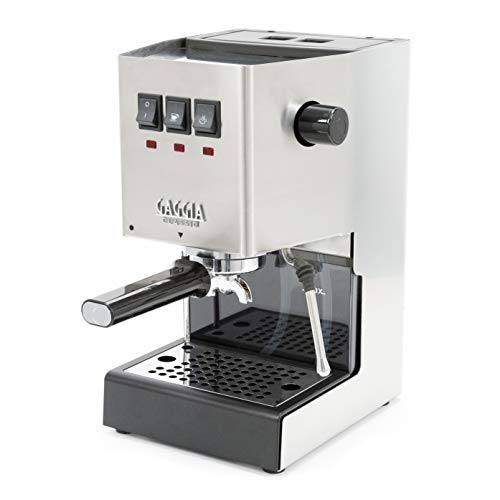
Gaggia Stainless Steel Espresso Machine
Best for: Manual espresso enthusiasts seeking durability
- Milk Frother
- Commercial steam wand
- Pump Pressure
- 9 Bar
- Color
- Stainless Steel
- Dimensions
- 3.15 × 3.74 × 5.59 inches
- Weight
- 20 pounds
View on Amazon: Gaggia Stainless Steel Espresso Machine Affiliate link
This Gaggia machine features a solid steel housing and a 58mm commercial portafilter. It delivers 9 bar extraction pressure through a commercial steam wand. The brushed stainless steel build weighs 20 pounds. It suits those who want durable, commercial-style components for home espresso preparation.
Pros
- Solid steel housing made in Italy
- 58mm commercial portafilter
- 9 bar extraction pressure
- Commercial steam wand
Cons
- No programmable shot volumes listed
- Manual milk steaming only
- No digital display for settings
Good fit if
- You want commercial-grade portafilter size
- You prefer durable metal construction
- You like manual milk texturing
Skip if
- You need automatic latte systems
- You want programmable shot amounts
- You prefer lightweight plastic builds
Verdict: Gaggia Stainless Steel Espresso Machine offers robust commercial specs for purists. It fits users who value build quality and manual control over digital convenience.

Gaggia Classic Evo Pro Espresso Machine
Best for: compact kitchens and manual brewing
- Milk Frother
- Commercial steam wand
- Pump Pressure
- 9 bar
- Color
- Green
- Dimensions
- 9.06 × 15 × 9.45 inches
- Weight
- 18.7 pounds
View on Amazon: Gaggia Classic Evo Pro Espresso Machine Affiliate link
This Gaggia Classic Evo Pro features a solid steel housing and a 58mm commercial portafilter. It delivers 9 bar pump pressure for consistent extraction. The unit includes a commercial steam wand and a three-way solenoid valve. It measures 15 by 9.06 by 9.45 inches and weighs 18.7 pounds. You get a compact machine built in Italy. It suits those who prefer a smaller footprint and traditional controls.
Pros
- Solid steel housing made in Italy
- 9 bar pump pressure for extraction
- Stainless steel 58mm commercial portafilter
- Commercial steam wand for milk texturing
- Commercial three-way solenoid valve
Cons
- Compact size may limit workspace
- Green color limits aesthetic options
- No digital display for temperature control
Good fit if
- You want a compact machine for small kitchens
- You prefer manual control over digital settings
- You need a durable steel housing
Skip if
- You require a larger water tank capacity
- You need automatic milk frothing
- You prefer a stainless steel finish
Verdict: Gaggia Classic Evo Pro Green is a compact, steel-built machine for those who value manual control and a small footprint. It fits users who want commercial-grade components in a smaller frame.
Specifications side by side
| Spec | Gaggia Stainless Steel Espresso Machine | Gaggia Classic Evo Pro Espresso Machine |
|---|---|---|
| Milk Frother | Commercial steam wand | Commercial steam wand |
| Pump Pressure | 9 Bar | 9 bar |
| Color | Stainless Steel | Green |
| Dimensions | 3.15 × 3.74 × 5.59 inches | 9.06 × 15 × 9.45 inches |
| Weight | 20 pounds | 18.7 pounds |
| Size | Small | Small |
| Model | RI9380/46 | 19520054 |
Frequently asked questions
What is the exact model number of the Gaggia Stainless Steel Espresso Machine?
The Gaggia Stainless Steel model number is RI9380/46. In contrast, the Gaggia Classic Evo Pro uses model number 19520054. You can use these specific manufacturer designations to confirm parts compatibility and identify the exact variant before you set up your home coffee station.
Which espresso machine weighs more between the RI9380/46 and Classic Evo Pro?
The Gaggia Stainless Steel RI9380/46 is the heavier option at 20 pounds. The Classic Evo Pro weighs 18.7 pounds, making it 1.3 pounds lighter. A heavier steel chassis gives you extra stability on the counter when you lock in the portafilter during daily brewing routines.
What color finishes are available on these two Gaggia espresso machines?
The RI9380/46 features a Brushed Stainless Steel finish, while this specific Classic Evo Pro comes in Green. Both units showcase steel construction under the surface. If you want traditional metallic styling, choose the stainless model. If you prefer colorful accent equipment, the green model stands out.
How do the dimensions of the Gaggia RI9380/46 compare to the Classic Evo Pro?
The Classic Evo Pro measures 15 inches wide, 9.45 inches high, and 9.06 inches long. The Gaggia RI9380/46 lists ultra-compact measurements at 3.74 inches wide, 5.59 inches high, and 3.15 inches long. Checking your available clearance helps you choose the right chassis for your counter space.
Do these Gaggia espresso machines offer automated brewing or manual operation?
Both models focus entirely on manual espresso preparation rather than digital automation. The RI9380/46 is built for manual espresso enthusiasts who prioritize durability and control over digital convenience. Similarly, the Classic Evo Pro targets users who want commercial-grade components alongside manual brewing control in a steel frame.
Who should choose the Gaggia Classic Evo Pro over the Stainless Steel RI9380/46?
You should choose the Classic Evo Pro if you want a compact machine suited for compact kitchens and manual brewing. The model provides commercial-grade components in an 18.7-pound steel body. Meanwhile, the RI9380/46 best serves manual espresso purists who place the highest priority on durability and weight.