Operation in Coffee Machines: What It Is and Is It Worth It?
As an Amazon Associate we earn from qualifying purchases. Links on this page are affiliate links.
Coffee Machine Operation Explained
When you browse for espresso or coffee machines, the operation mode is a fundamental specification. It determines how you interact with the device to brew your drink. The two primary categories are electric and manual. Understanding this distinction helps you choose the right tool for your daily routine.
Electric operation means the machine handles the heavy lifting. You press a button, and internal motors, pumps, and heating elements take over. These components regulate water temperature, pressure, and flow rate automatically. This consistency is why many users prefer electric models for daily convenience. You get a standardized cup every time with minimal effort. The machine manages the variables so you do not have to.
Manual operation requires physical input from you. You might use a lever, a piston, or a hand pump to generate pressure. In these devices, the heating element still works, but the extraction force comes from your arm. This method offers precise control over the brewing process. You decide exactly when to stop the flow. It is a more involved experience that rewards patience and skill. The result can be unique, but it demands attention.
How do you identify these specs on product listings? Look for terms like "semi-automatic," "fully-automatic," or "manual." Fully-automatic machines grind, tamp, and brew with the push of a button. Semi-automatics often require you to tamp the coffee yourself but use an electric pump for water pressure. Pure manual machines rely entirely on human force. Check the technical specifications section for clarity. Some listings may use vague language, so verifying the mechanism is key.
Why does this matter to you? It comes down to your desire for control versus convenience. If you want speed and consistency, electric operation fits best. If you enjoy the ritual and want to tweak every detail, manual is worth it. Consider your morning habits. Do you have time to engage with the machine, or do you need it to work quietly in the background? The operation type defines that relationship. Choosing the right one ensures your coffee experience matches your lifestyle. This simple spec guides you toward a machine that feels natural to use.
Electric vs Manual Operation
Electric
Electric machines use internal heating elements and pumps to automate the brewing process. You plug the device into a power outlet, and the machine handles water heating and pressure generation. This setup reduces physical effort and often delivers consistent results with minimal user intervention. The Presto 12-Cup Stainless Steel Electric Percolator exemplifies this approach, offering high-volume brewing for groups without requiring manual labor. You gain convenience and speed, particularly when preparing large quantities quickly. However, electric models typically require a nearby power source, limiting where you can place them. They also tend to be larger and heavier than manual alternatives. The De'Longhi Stilosa Compact Manual Espresso Machine is not electric, highlighting the contrast in power requirements. Electric options suit users who prioritize ease of use and volume over portability or manual control.
Manual
Manual coffee machines rely on your physical strength to generate pressure and control the brew. You typically use a lever, piston, or gravity to push water through the coffee grounds. This method demands more effort and technique but offers precise control over every variable. The AeroPress Clear Manual Coffee Maker is a prime example, allowing you to craft small-batch coffee with total manual oversight. It is lightweight and compact, making it ideal for travel or limited counter space. You do not need electricity, which adds versatility for camping or office use. The trade-off is that brewing requires more time and skill. You must manage pressure and timing yourself. The De'Longhi Stilosa Compact Manual Espresso Machine also fits this category, requiring you to manage milk frothing and extraction manually. This option suits enthusiasts who enjoy the craft and value durability and portability over automated convenience.
Is Operation Mode Worth Your Choice
Who needs it
You need electric operation if you value speed and consistency in your daily routine. These machines handle water heating and pressure generation automatically. You simply plug the device in and start the brew cycle. This reduces physical effort significantly. If you prefer a hands-off approach, electric models are the right fit. They deliver consistent results with minimal intervention. This is ideal for busy mornings or when you want reliable performance without manual adjustments. Manual operation requires more involvement. You control the pressure and timing yourself. This can be tedious if you brew frequently. Electric operation removes that friction. It allows you to focus on other tasks while the machine works. If you prioritize convenience and repeatability, choose electric. It simplifies the entire process from start to finish.
Who can skip it
You can skip electric operation if you enjoy the ritual of brewing. Manual machines require physical effort but offer greater control. You decide the pressure and extraction time. This appeals to those who view coffee making as a craft. If you prefer a tactile experience, manual is better. You also skip electric if you lack power outlets. Some setups are portable or off-grid. Manual devices work without electricity. They are simpler and often more durable. Prioritize build quality and portability instead. Look for materials that withstand wear. Consider ease of cleaning. These factors matter more than automation for manual users. Electric features add complexity you may not need. Focus on the core brewing mechanics. Ensure the device fits your space and power situation. Manual operation suits those who want direct involvement.
Key Machine Specs
Brew Pressure
Water force in bars. Espresso needs nine bars for proper extraction. Higher pressure pushes water through grounds faster, affecting flavor intensity and crema quality.
Water Capacity
Reservoir size in liters or ounces. Larger tanks mean fewer refills. Check this number to ensure the machine fits your kitchen counter and usage habits.
Grinder Type
Built-in or separate unit. Burr grinders crush beans uniformly. Blade grinders chop them unevenly. Consistent grind size improves espresso quality and reduces channeling.
Heating System
Thermoblock or boiler. Thermoblocks heat water quickly for single shots. Boilers hold more hot water for back-to-back drinks. System choice affects warm-up time.
Portafilter Size
Basket diameter in millimeters. Common sizes are fifty-eight and fifty-four. Larger baskets hold more coffee for stronger drinks. Match this to your grinder basket.
Steam Wand
Metal tube for frothing milk. Single holes create dry foam. Multi-hole wands create wet microfoam. Look for independent steam boilers for best texturing results.
Auto Shut Off
Safety feature that powers down the machine after inactivity. Saves energy and prevents overheating. Check the timer duration to ensure it matches your workflow.
Quick picks
| # | Product | Best for | Price |
|---|---|---|---|
| 1 | AeroPress Clear Manual Coffee Maker | portable manual brewing | Check price of AeroPress Clear Manual Coffee Maker on Amazon |
| 2 | Presto 12-Cup Stainless Steel Electric Percolator | large group electric coffee brewing | Check price of Presto 12-Cup Stainless Steel Electric Percolator on Amazon |
| 3 | De'Longhi Stilosa Compact Manual Espresso Machine | manual single and double espresso brewing | Check price of De'Longhi Stilosa Compact Manual Espresso Machine on Amazon |
| 4 | IMUSA 6 or 3-Cup Electric Espresso Maker | Simple electric brewing for small servings | Check price of IMUSA 6 or 3-Cup Electric Espresso Maker on Amazon |
Our 4 picks
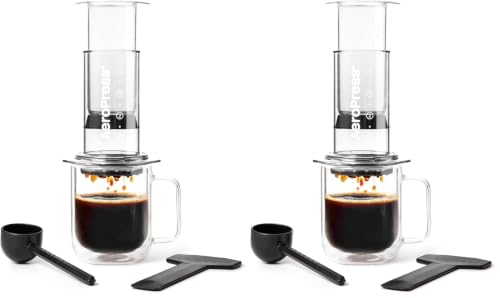
AeroPress Clear Manual Coffee Maker
Best for: portable manual brewing
- Operation
- Manual (what this guide is about)
- Intended Use
- Travel
- Dimensions
- 4.75 × 4.75 × 11.7 inches
- Weight
- 1.49 pounds
View on Amazon: AeroPress Clear Manual Coffee Maker Affiliate link
The AeroPress Clear is a manual brewer built from shatterproof Tritan. It combines French press, pour-over, and espresso-style techniques in one device. Measuring 11.7 inches tall and weighing 1.49 pounds, it is compact enough for travel. You get full control over brew time, temperature, and grind size. This manual operation lets you craft smooth, full-bodied coffee quickly without electricity.
Pros
- Shatterproof Tritan construction for durability
- Manual operation requires no electricity
- Compact size fits in backpacks
- 3-in-1 brewing technology
Cons
- Manual operation requires physical effort
- Small batch capacity per brew
- No integrated grinder or heating element
Good fit if
- You want portable coffee gear
- You prefer manual control over extraction
- You need a durable travel brewer
Skip if
- You need fully automatic brewing
- You want to brew large batches
- You prefer electric convenience
Verdict: AeroPress Clear Manual Brewer is ideal for travelers who value durability and manual control. It suits those who want to craft precise, small-batch coffee without relying on power outlets.

Presto 12-Cup Stainless Steel Electric Percolator
Best for: large group electric coffee brewing
- Operation
- Electric (what this guide is about)
- Capacity
- 12-Cups
- Brew Sizes
- 2 to 12 cups
- Color
- Silver
- Dimensions
- 13.1 × 9.7 × 6.2 inches
- Weight
- 2.9 pounds
View on Amazon: Presto 12-Cup Stainless Steel Electric Percolator Affiliate link
This Presto percolator brews 2 to 12 cups of coffee using electric operation. It features a stainless steel body and an automatic temperature control system to keep coffee hot. The unit includes a signal light for readiness and a stay-cool handle. It measures 13.1 by 9.7 by 6.2 inches and weighs 2.9 pounds. You get a 1-year limited warranty with this classic silver model.
Pros
- Brews 2 to 12 cups of coffee
- Automatic temperature control keeps coffee hot
- Stainless steel construction for easy cleaning
- Signal light indicates when coffee is ready
Cons
- Percolation method can over-extract coffee
- No programmable timer or auto-shutoff
- Limited to 1-year warranty coverage
Good fit if
- You want simple electric brewing
- You need a large 12-cup capacity
- You prefer stainless steel durability
Skip if
- You need precise temperature control
- You want programmable brewing schedules
- You prefer drip or espresso methods
Verdict: Presto 12-Cup Electric Percolator suits you if you want simple, high-volume electric brewing with durable stainless steel construction. It fits groups needing hot coffee quickly without complex features.
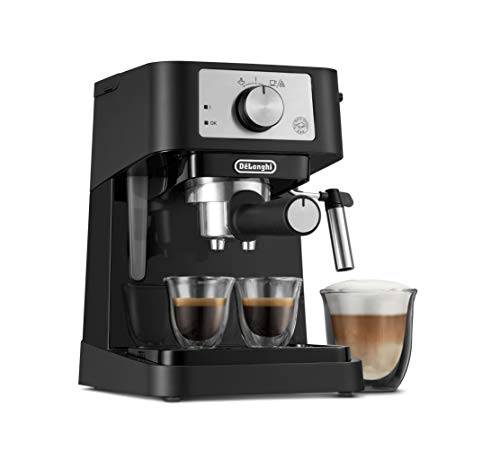
De'Longhi Stilosa Compact Manual Espresso Machine
Best for: manual single and double espresso brewing
- Operation
- Manual (what this guide is about)
- Brew Sizes
- Single or double espresso
- Milk Frother
- Manual steam wand
- Pump Pressure
- 15 bar
- Heating System
- Stainless steel boiler
- Features
- Milk Frother
View on Amazon: De'Longhi Stilosa Compact Manual Espresso Machine Affiliate link
The De'Longhi Stilosa is a compact manual espresso machine featuring a stainless steel boiler and a manual steam wand. It includes a portafilter with single and double espresso filters alongside a measuring scoop and tamper. This machine suits you if you want manual control over pulling espresso shots and texturing milk on a compact countertop unit.
Pros
- Stainless steel boiler engineered for longevity
- Manual steam wand for texturing milk
- Includes portafilter, scoop, tamper, and two filter baskets
Cons
- Limited to single and double espresso shot brew sizes
- Does not include an integrated coffee bean grinder
Good fit if
- You want manual steam wand control for texturing latte and cappuccino milk.
- You only brew single or double espresso servings.
Skip if
- You need multi-cup coffee batches for multiple servings at once.
- You want an all-in-one machine with an integrated coffee grinder.
Verdict: De'Longhi Stilosa Manual Espresso Machine suits espresso drinkers who want dedicated single or double shot brewing and manual milk steaming without taking up excessive counter space.

IMUSA 6 or 3-Cup Electric Espresso Maker
Best for: Simple electric brewing for small servings
- Operation
- Electric (what this guide is about)
- Capacity
- 6 or 3 espresso cups (1.5 oz each)
- Brew Sizes
- 3 or 6 espresso cups (1.5 oz each)
- Carafe Type
- Brown tinted
- Color
- Black
- Dimensions
- 7.1 × 4.72 × 9.3 inches
View on Amazon: IMUSA 6 or 3-Cup Electric Espresso Maker Affiliate link
This Imusa electric espresso maker brews 6 or 3 cups using a cast aluminum base. It features a detachable base with an on/off switch and a visual brewing indicator. The unit includes a brown tinted carafe and a cool-touch handle for safe operation. Its compact dimensions and lightweight build make it suitable for small kitchens or travel. It supports traditional espresso and Moka styles.
Pros
- Brews 6 or 3 espresso cups (1.5 oz each)
- Cast aluminum base for durability
- Cool-touch handle for safe operation
- Visual brewing indicator
- Detachable base with on/off switch
Cons
- No milk frother included
- Small 1.5 oz cup capacity per shot
- Basic manual controls only
Good fit if
- You want a simple electric machine for small batches
- You need a lightweight unit for travel or office use
- You prefer traditional espresso or Moka styles
Skip if
- You need automatic milk frothing
- You prefer large 8 oz or bigger servings
- You want programmable brewing settings
Verdict: Imusa 6 Cup Electric Espresso Maker offers a straightforward electric brewing experience with a durable aluminum base and safe cool-touch handle. It fits users who prioritize simplicity and portability over advanced features or large volumes.
Specifications side by side
| Spec | AeroPress Clear Manual Coffee Maker | Presto 12-Cup Stainless Steel Electric Percolator | De'Longhi Stilosa Compact Manual Espresso Machine | IMUSA 6 or 3-Cup Electric Espresso Maker |
|---|---|---|---|---|
| Capacity | not stated | 12-Cups | not stated | 6 or 3 espresso cups (1.5 oz each) |
| Brew Sizes | not stated | 2 to 12 cups | Single or double espresso | 3 or 6 espresso cups (1.5 oz each) |
| Milk Frother | not stated | not stated | Manual steam wand | not stated |
| Pump Pressure | not stated | not stated | 15 bar | not stated |
| Carafe Type | not stated | not stated | not stated | Brown tinted |
| Heating System | not stated | not stated | Stainless steel boiler | not stated |
| Pressure | not stated | not stated | 15 Bar | not stated |
| Features | not stated | not stated | Milk Frother | not stated |
| Intended Use | Travel | not stated | not stated | not stated |
| Operation | Manual | Electric | Manual | Electric |
| Color | Clear | Silver | Black | Black |
| Dimensions | 4.75 × 4.75 × 11.7 inches | 13.1 × 9.7 × 6.2 inches | 8.07 × 13.5 × 11.2 inches | 7.1 × 4.72 × 9.3 inches |
| Weight | 1.49 pounds | 2.9 pounds | 8.61 pounds | 2.75 pounds |
| Size | Standard (Pack of 2) | 12-Cups | Medium | 6 Cup |
| Model | AeroPress Clear | 02811 | EC260BK | GAU-18234 |
Frequently asked questions
What is the difference between electric and manual coffee machine operation?
Electric machines use internal heating elements and pumps to automate brewing. You plug them in, and they handle water heating and pressure generation. Manual machines require physical effort to brew. You control the process yourself, often using pressure or gravity. This choice defines how much work you do versus how much the device does for you.
Which coffee maker is best for portable manual brewing?
The AeroPress Clear Manual Coffee Maker is ideal for travelers. It features a manual operation mode, meaning it requires no power outlets. The unit measures 4.75 inches wide and 11.7 inches tall. It weighs only 1.49 pounds, making it easy to carry. You get precise, small-batch coffee control without relying on electricity.
Is there an electric percolator for large groups?
Yes, the Presto 12-Cup Stainless Steel Electric Percolator suits large groups. It offers 12-cup capacity and electric operation for simple, high-volume brewing. The device weighs 2.9 pounds and measures 13.1 inches long. It uses durable stainless steel construction. You get hot coffee quickly without complex features, fitting needs for speed and consistency.
Can I make espresso manually with a compact machine?
The De'Longhi Stilosa Compact Manual Espresso Machine fits beginners who want to learn manual techniques. It features a manual operation mode and includes a milk frother. The unit weighs 8.61 pounds and measures 13.5 inches wide. You get a durable boiler and manual frothing control. It is suitable for those willing to put in the effort for precise results.
What is a simple electric option for small servings?
The IMUSA 6 or 3-Cup Electric Espresso Maker offers straightforward electric brewing. It is designed for small servings and prioritizes simplicity. The unit weighs 2.75 pounds and measures 7.1 inches long. It features a durable aluminum base and a safe cool-touch handle. You get portability and easy operation without advanced features or large volume capacity.
Do manual coffee makers require electricity to work?
No, manual coffee makers do not require electricity. They rely on physical actions like pressing, pumping, or pouring hot water. For example, the AeroPress Clear Manual Coffee Maker operates entirely by hand. This makes it suitable for travel or locations without power outlets. You control the brewing process directly, which allows for precise adjustments to your coffee strength and flavor.
Which electric machine has the largest capacity?
The Presto 12-Cup Stainless Steel Electric Percolator has the largest capacity listed. It brews 12 cups of coffee using electric operation. The device measures 9.7 inches wide and 6.2 inches tall. It is designed for groups needing hot coffee quickly. You benefit from automated heating and consistent results, making it ideal for serving multiple people at once.