Pressure in Coffee Machines: What It Is and Is It Worth It?
As an Amazon Associate we earn from qualifying purchases. Links on this page are affiliate links.
Understanding Pressure in Coffee Machines
Pressure is the force that pushes hot water through your coffee grounds. It is the single most important factor in making espresso. Without enough force, water flows too fast. The result is weak, sour coffee. With too much force, water struggles to pass. The result is bitter, burnt coffee. You need a balance. This is why pressure explained is essential for any buyer.
Most machines list pressure in bars. You will see labels like 15 Bar or 20 Bar on product pages. These numbers represent the maximum pump capacity. They do not always reflect the actual pressure during brewing. A machine labeled 20 Bar does not necessarily brew at 20 Bars. It means the pump can generate that much force if needed. Many modern machines use 15 Bar pumps. This is the industry standard for home espresso makers. It provides enough power to create crema.
Why do you care about this spec? High pressure helps extract oils and solids from the coffee. These elements create the rich flavor and thick foam on top of your shot. If the pressure is too low, extraction is incomplete. The coffee lacks body. If the pressure is too high, it can damage the portafilter seal. It can also force water through too quickly. This leads to uneven extraction.
You should look for machines with adjustable pressure controls. Some advanced models let you dial in the exact bars. This gives you more control over the taste. If the listing only shows a maximum number, assume it is sufficient for standard espresso. You do not need extreme pressure for good coffee. Consistency matters more than raw power. Check the pump type as well. Rotary pumps often handle higher pressures more quietly than vibration pumps. But for most home users, a standard 15 Bar pump is perfectly adequate. Focus on how the machine manages that pressure during the brew cycle. That is where the real quality comes from.
20 Bar vs 15 Bar Pressure
20 Bar
This rating indicates a pump capable of generating high force. Machines like the Gevi Compact use this spec to drive water through tightly packed grounds. The goal is efficient extraction of oils and solids. You get a thicker crema layer on your shot. This pressure level suits manual brewers who want control over the flow. It works well for traditional espresso styles. However, higher pressure does not always mean better taste. If the grind is too coarse, the water may channel. This leads to uneven extraction. You must pair this pressure with a consistent grind size. The Gevi model shows how this spec supports a durable build for home use.
15 Bar
This rating reflects a standard pump output for many modern machines. The Philips 3300 and Chefman CraftBrew operate at this level. It provides sufficient force for proper extraction without excessive strain on the portafilter. You get a balanced shot with good body. This spec suits users who prioritize consistency over maximum pressure. It is often paired with automatic features like built-in grinders. The trade-off is slightly less aggressive extraction compared to 20-bar models. However, it is often more forgiving with minor grind variations. The Chefman model demonstrates how this pressure supports manual volume control. It remains a practical choice for daily home brewing needs.
Who Needs High Pressure Espresso?
Who needs it
You should prioritize a machine with 20 Bar pressure if you demand a thick, creamy layer of crema on every cup. This higher force ensures water penetrates densely packed grounds effectively. It is ideal for those who enjoy traditional Italian-style espresso with a rich mouthfeel. If you often pull shots with dark roasts or fine grinds, the extra power helps overcome resistance. You will notice a more consistent extraction and better flavor balance. This spec matters most when you want professional-quality results at home. It is also useful if you frequently adjust grind sizes or tamp with varying force. The higher pressure provides a buffer against user error. You get a more forgiving brewing process that delivers reliable results even if your technique is not perfect. It suits enthusiasts who view espresso making as a craft.
Who can skip it
You can ignore high pressure ratings if you primarily brew drip coffee or use a French press. These methods do not rely on forced water flow. Even if you make espresso, 15 Bar is sufficient for most home users. The difference in cup quality between 15 and 20 Bar is often negligible for casual drinkers. Focus your attention on grinder quality instead. A consistent grind size impacts flavor more than pump pressure. You should also consider the boiler type and temperature stability. These factors control extraction more directly than raw bar numbers. If you prefer lighter roasts or milk-based drinks, standard pressure works fine. Do not pay extra for marketing numbers that do not improve your daily brew. Prioritize build quality and ease of cleaning. These features offer better long-term value than a higher pressure spec.
Key Pressure Terms
Extraction pressure
The force pushing water through grounds. Standard espresso requires about 9 bars. This ensures proper flavor balance and crema formation.
Pump pressure
The maximum force the machine's pump can generate. Specs often list 15 or 20 bars. This is the potential power, not the brewing force.
Crema
The golden foam on top of espresso. It comes from emulsified oils and carbon dioxide. Higher pressure helps create a thicker, more stable crema layer.
Bar
A unit measuring pressure. One bar equals roughly atmospheric pressure. Espresso brewing typically uses between 8 and 10 bars for optimal results.
Over-extraction
When water pulls too many bitter compounds. This happens if pressure is too high or time is too long. The result is a harsh, unpleasant taste.
Under-extraction
When water flows through too quickly. This results in weak, sour coffee. Insufficient pressure or coarse grounds often cause this issue.
Portafilter
The handle holding the coffee grounds. It locks into the group head. Pressure builds inside this sealed chamber during the brewing process.
Group head
The part of the machine where water meets the coffee. It connects the pump to the portafilter. This is where the pressure is applied.
Quick picks
Our 6 picks

Gevi Compact 20-Bar Espresso Machine
Best for: Home users seeking manual control and stainless steel build
- Pressure
- 20 Bar (what this guide is about)
- Capacity
- 34 oz
- Milk Frother
- Steam wand
- Pump Pressure
- 20-bar
- Drink Type
- Cappuccino, Latte
- Intended Use
- Home
View on Amazon: Gevi Compact 20-Bar Espresso Machine Affiliate link
This Gevi machine uses a 20-bar pump with pre-infusion to extract flavor. It includes an NTC temperature control system and a pressure gauge for monitoring extraction. The stainless steel housing is compact, measuring 12.3 inches deep and 5.5 inches wide. You get a steam wand for microfoam and a hot water function for Americanos. It is designed for home use and fits small countertops.
Pros
- 20-bar pump with pre-infusion feature
- NTC temperature control for stability
- Full stainless steel housing
- Steam wand for milk frothing
- Hot water function for tea or Americanos
Cons
- Semi-automatic operation requires manual effort
- No built-in grinder for fresh beans
- Limited to single or double shots without portafilter details
Good fit if
- You want a 20-bar pressure system for extraction
- You need a compact stainless steel machine for small kitchens
- You prefer manual control over fully automatic brewing
Skip if
- You require a fully automatic bean-to-cup experience
- You need a built-in grinder for convenience
- You prefer digital touch screen interfaces over manual controls
Verdict: Gevi 20-Bar Stainless Steel Espresso Maker delivers consistent extraction through its 20-bar pump and pre-infusion. It suits home users who value stainless steel durability and manual control over automated convenience.
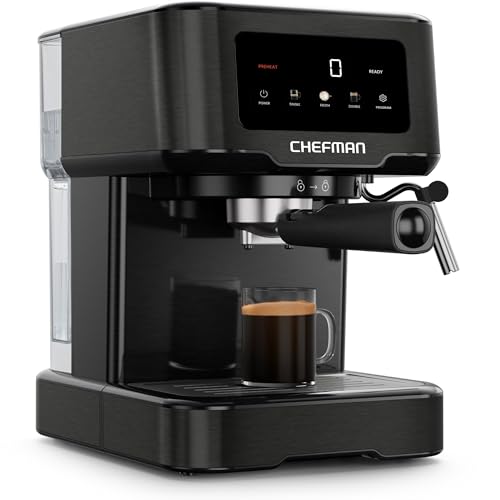
Chefman CraftBrew 15-Bar Digital Espresso Machine
Best for: manual espresso brewing with volume control
- Pressure
- 15 Bar (what this guide is about)
- Capacity
- 1.5-Liter
- Brew Sizes
- Single- or double shots
- Milk Frother
- Built-in steam wand
- Pump Pressure
- 15-Bar
- Features
- Steam Wand, Removable Reservoir
View on Amazon: Chefman CraftBrew 15-Bar Digital Espresso Machine Affiliate link
The Chefman CraftBrew is a 15-bar pump espresso maker with a 1.5-liter removable water tank. It features a built-in steam wand for milk drinks and a digital touch panel for volume control. You can brew single or double shots. The compact stainless black design fits small kitchens. It suits those who want manual control over shot size without the complexity of fully automatic machines.
Pros
- 15-bar pump pressure for consistent extraction
- 1.5-liter removable water reservoir
- Built-in steam wand for milk frothing
- Digital touch panel with programmable shot volume
Cons
- 15-bar pressure is lower than the 20-bar standard found in most competitors
- Manual operation requires you to manage the steam wand and shot timing
- No automatic milk frothing or one-touch drink programs
Good fit if
- You want to customize your espresso shot volume manually
- You prefer a compact machine with a large water tank
- You are comfortable using a traditional steam wand
Skip if
- You require the higher 20-bar pressure found in other options
- You want a fully automatic machine that froths milk for you
- You prefer a machine with a digital display for precise temperature control
Verdict: Chefman CraftBrew 15-Bar Espresso Maker delivers solid manual control with a generous 1.5-liter tank. It is a practical choice for users who prioritize shot customization over the higher pressure specs of other models on this list.
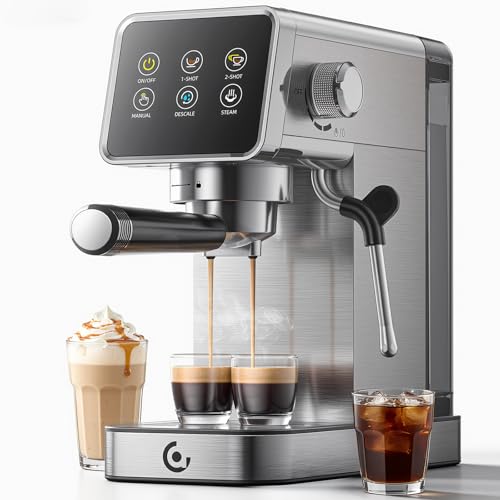
AMZCHEF 20-Bar Self-Cleaning Espresso Machine
Best for: manual latte art and high pressure
- Pressure
- 20 Bar (what this guide is about)
- Capacity
- 44 oz
- Milk Frother
- Manual steam wand
- Pump Pressure
- 20-bar
- Heating System
- 1350W thermoblock
- Drink Type
- Latte
View on Amazon: AMZCHEF 20-Bar Self-Cleaning Espresso Machine Affiliate link
This AMZCHEF machine uses a 20-bar pump to extract oils and create rich crema, exceeding the standard 9-bar pressure. The 1350W thermoblock heats in under three minutes, while the 44 oz reservoir supports eight to ten cups. You get a manual steam wand for milk texture control and an LCD display for monitoring temperature. It includes self-cleaning functions and a 3-year warranty.
Pros
- 20-bar pump for deep extraction
- 1350W thermoblock heats in under 3 minutes
- 44 oz water tank holds 8-10 cups
- Manual 360-degree swivel steam wand
- Built-in self-cleaning function
Cons
- Manual operation requires skill for latte art
- LCD display shows basic info only
- No automatic milk frothing system
Good fit if
- You want richer crema from higher pressure
- You prefer manual control over milk texture
- You need a large water reservoir
Skip if
- You want fully automatic milk frothing
- You prefer digital pressure control
- You need a compact footprint under 12 inches
Verdict: AMZCHEF 20 Bar Espresso Machine suits those who value manual control and high pressure for crema. It fits users who want a large tank and self-cleaning convenience.

Philips 3300 Fully Automatic Espresso Machine
Best for: Users wanting automated grinding and iced coffee presets
- Pressure
- 15 Bar (what this guide is about)
- Milk Frother
- Classic milk frother
- Integrated Grinder
- Integrated grinder
- Pump Pressure
- 15 bar
- Features
- Milk Frother, Built-In Grinder
- Drink Type
- Iced Coffee
View on Amazon: Philips 3300 Fully Automatic Espresso Machine Affiliate link
The Philips 3300 Series is a fully automatic espresso machine with a 15-bar pump pressure. It features an integrated grinder and a classic milk frother for latte and cappuccino preparation. The unit includes a full color display and five preset drink options, including iced coffee. It measures 17.04 inches wide and weighs 16.5 pounds. This machine suits users who want automated brewing with integrated grinding and milk texturing capabilities.
Pros
- 15-bar pump pressure for consistent extraction
- Integrated grinder for fresh bean preparation
- Classic milk frother for silky smooth milk
- Five preset drink options including iced coffee
- Full color display for intuitive operation
Cons
- 15-bar pressure is lower than the 20-bar pumps found in other list items
- Classic milk frother requires manual steam management compared to automatic systems
- Larger footprint at 17.04 inches wide may not fit compact counters
Good fit if
- You want fully automatic brewing with an integrated grinder
- You prefer a classic milk frother for manual texturing control
- You need preset options for both hot and iced coffee
Skip if
- You require 20-bar pump pressure for maximum extraction force
- You need an automatic milk system without manual intervention
- You have limited counter space under 17 inches wide
Verdict: Philips 3300 Series Fully Automatic Espresso Machine fits users who prioritize automated grinding and versatile drink presets over maximum pump pressure. It is a solid choice for those willing to manage milk frothing manually.

Neretva 20 Bar Compact Espresso Machine
Best for: manual brewing with precise temp control
- Pressure
- 20 Bar (what this guide is about)
- Milk Frother
- Steam wand
- Pump Pressure
- 20 bar, low-pressure pre-infusion
- Heating System
- 1350W boiler
- Drink Type
- Cappuccino, Latte
- Intended Use
- Home
View on Amazon: Neretva 20 Bar Compact Espresso Machine Affiliate link
The Neretva PE3670U is a silver espresso machine built around a 20-bar pressure system and a 1350W boiler. It features a low-pressure pre-infusion function to improve extraction and a digital temperature display for precise control. The unit includes a steam wand for milk frothing. Measuring 12 by 11 by 9.1 inches, it offers a compact footprint for smaller kitchens while maintaining professional-grade pressure specs.
Pros
- 20-bar pump pressure for strong extraction
- 1350W boiler for consistent heating
- Digital temperature display for monitoring
- Low-pressure pre-infusion function
- Steam wand for milk texturing
Cons
- Weighs 17 pounds, adding bulk
- Requires manual milk frothing
- No automatic brew programs listed
Good fit if
- You want 20-bar pressure in a small footprint
- You prefer manual control over temperature
- You need a steam wand for lattes
Skip if
- You want a fully automatic machine
- You need a lighter unit under 10 pounds
- You prefer bean-to-cup convenience
Verdict: Neretva 20 Bar Compact Espresso Machine delivers high pressure and precise temperature monitoring in a small frame. It suits manual brewers who value control and compact size over automated convenience.

Electactic 15-Bar Espresso Machine with Grinder
Best for: Home users wanting integrated grinding and manual frothing
- Capacity
- 78 oz (2.3 L)
- Milk Frother
- Steam wand
- Integrated Grinder
- 30 grind settings
- Pump Pressure
- 15 bar
- Features
- Steam Wand, Built-In Grinder, Removable Reservoir
- Drink Type
- Cappuccino, Latte
View on Amazon: Electactic 15-Bar Espresso Machine with Grinder Affiliate link
This Electactic machine combines a 15 bar pump with a built-in anti-clog grinder. You get a 2.3 liter water tank and a steam wand for milk drinks. The medium footprint measures 13 by 11.5 inches. It suits home users who want fresh grounds and decent pressure without buying separate equipment. The 18 pound build feels sturdy.
Pros
- 15 bar pump pressure for extraction
- Built-in anti-clog grinder with wider chute
- 2.3 liter removable water tank
- Steam wand for microfoam milk drinks
Cons
- 15 bar pressure is lower than 20 bar competitors
- 18 pounds weight adds bulk
- No automatic milk texturing system
Good fit if
- You want fresh grounds from a built-in grinder
- You prefer manual steam wand control
- You need a 2.3 liter water capacity
Skip if
- You require 20 bar pressure for maximum extraction
- You want a fully automatic milk system
- You need a compact footprint under 12 inches wide
Verdict: Electactic 15 Bar Espresso Machine with Grinder fits users who value integrated grinding and manual frothing over peak pressure. It delivers consistent results for lattes and cappuccinos at home.
Specifications side by side
| Spec | Gevi Compact 20-Bar Espresso Machine | Chefman CraftBrew 15-Bar Digital Espresso Machine | AMZCHEF 20-Bar Self-Cleaning Espresso Machine | Philips 3300 Fully Automatic Espresso Machine | Neretva 20 Bar Compact Espresso Machine | Electactic 15-Bar Espresso Machine with Grinder |
|---|---|---|---|---|---|---|
| Capacity | 34 oz | 1.5-Liter | 44 oz | not stated | not stated | 78 oz (2.3 L) |
| Brew Sizes | not stated | Single- or double shots | not stated | not stated | not stated | not stated |
| Milk Frother | Steam wand | Built-in steam wand | Manual steam wand | Classic milk frother | Steam wand | Steam wand |
| Integrated Grinder | not stated | not stated | not stated | Integrated grinder | not stated | 30 grind settings |
| Pump Pressure | 20-bar | 15-Bar | 20-bar | 15 bar | 20 bar, low-pressure pre-infusion | 15 bar |
| Heating System | not stated | not stated | 1350W thermoblock | not stated | 1350W boiler | not stated |
| Pressure | 20 Bar | 15 Bar | 20 Bar | 15 Bar | 20 Bar | not stated |
| Features | Steam Wand | Steam Wand, Removable Reservoir | Steam Wand | Milk Frother, Built-In Grinder | not stated | Steam Wand, Built-In Grinder, Removable Reservoir |
| Drink Type | Cappuccino, Latte | Cappuccino, Latte | Latte | Iced Coffee | Cappuccino, Latte | Cappuccino, Latte |
| Intended Use | Home | not stated | not stated | not stated | Home | not stated |
| Operation | not stated | not stated | Manual | Automatic | not stated | not stated |
| Color | Sterling Silver | Stainless Black | Platinum | Black Chrome | Silver | Almond |
| Dimensions | 12.3 × 5.5 × 12 inches | 10.8 × 8.9 × 11.9 inches | 12.1 × 13 × 6.5 inches | 14.6 × 9.68 × 17 inches | 11 × 12 × 9.1 inches | 11.5 × 13 × 16.1 inches |
| Weight | 8.6 pounds | not stated | 8.5 pounds | 16.5 pounds | 17 pounds | 18 pounds |
| Size | 12.3"D x 5.5"W x 12"H | 1.5 Liter | 44oz | 9.68"D x 17.04"W x 14.6"H | not stated | Medium |
| Model | ECMG0 | RJ54-SS-15-D-BLK | EM1507 | EP3326/90 | PE3670U | CM5431D-UL |
Frequently asked questions
Is 20 bar pressure better than 15 bar for espresso?
Higher pressure forces water through grounds more aggressively. The Gevi Compact uses 20 Bar to drive consistent extraction. This creates a thick crema layer. The Chefman CraftBrew uses 15 Bar. It offers solid manual control for customization. Both levels work well for home brewing. The difference lies in the desired texture and extraction speed.
Does a 15 bar machine make good crema?
Yes, 15 Bar machines produce adequate crema. The Philips 3300 Series operates at this pressure. It prioritizes automated grinding and drink presets. The Electactic model also uses 15 Bar. It delivers consistent results for lattes. The pressure is sufficient for standard extraction. You get a balanced flavor profile without needing maximum force.
Can I make lattes with a 20 bar espresso maker?
You can make lattes with these machines. The Gevi Compact handles Cappuccinos and Lattes. The AMZCHEF model supports manual latte art. The Neretva machine also brews these drinks. High pressure helps extract oils for the base. You then use the steam wand for milk. The combination creates the classic layered drink you enjoy.
What size is a 20 bar espresso machine?
Sizes vary by brand and model. The Gevi Compact measures 12.3 inches deep. The Neretva machine is 12 inches wide. The AMZCHEF model is 12.1 inches long. These dimensions fit most kitchen counters. The height ranges from 9.1 to 13 inches. You should check the footprint before buying. Compact designs save space while delivering high pressure.
Do I need a grinder with 15 bar pressure?
A grinder is not strictly required. The Chefman CraftBrew works without one. The Philips 3300 includes a built-in grinder. The Electactic model also has an integrated grinder. Grinding fresh beans improves flavor. The pressure extracts the grounds effectively. You can use pre-ground coffee if preferred. The choice depends on your convenience needs.
Is stainless steel better for pressure machines?
Stainless steel offers durability and heat retention. The Gevi Compact features a stainless steel build. The Chefman CraftBrew has stainless black accents. These materials withstand high pressure better. They also resist corrosion over time. The Neretva machine uses a silver finish. The material choice affects longevity. It ensures the machine handles daily use well.
How heavy are 20 bar espresso machines?
Weight varies by construction and size. The Gevi Compact weighs 8.6 pounds. The AMZCHEF model is 8.5 pounds. The Neretva machine is heavier at 17 pounds. Heavier units often feel more stable. Lighter models are easier to move. The weight impacts portability. You should consider where you place it. Stability helps during high-pressure extraction cycles.
Can I clean a 20 bar machine easily?
Some models offer self-cleaning features. The AMZCHEF machine includes self-cleaning convenience. The Gevi Compact requires manual maintenance. The Philips 3300 has automated cycles. Regular cleaning ensures consistent pressure. Residue can block water flow. You should follow the manufacturer instructions. Cleaning the steam wand is also vital. This maintains the machine's performance over time.